Shijiazhuang Zhengdrilling Machinery Equipment Co., Ltd.
Service Email: bruce@well-drillrigs.com
Bruce:+86-18603299555
 EN
 ES
 FR
 RU


Choosing the right air compressor for a water well drilling rig is an important part of planning a borehole drilling project. The compressor must provide sufficient working pressure and airflow for the selected drilling method, rock formation, drilling tools, and required hole diameter.
An undersized compressor may reduce drilling efficiency or prevent the down-the-hole hammer from operating properly. An oversized unit can increase fuel consumption, transportation costs, and equipment investment without delivering proportional benefits.
For drilling contractors, equipment distributors, and groundwater project developers, compressor selection should therefore be based on the complete drilling system rather than pressure or horsepower alone.
ZDrill Machinery supplies water well drilling rigs and related drilling equipment for different project requirements. Buyers can review the available water well drilling rig models and confirm suitable compressor configurations according to their working conditions.
Working pressure is one of the first parameters to check when selecting a drilling air compressor. The required pressure depends on the drilling method, hammer specifications, borehole depth, and geological conditions.
For pneumatic drilling, compressed air helps operate the down-the-hole hammer and remove rock cuttings from the borehole. The compressor must maintain the required pressure under actual operating conditions, not merely reach a high pressure rating when running without a load.
Before purchasing a compressor, confirm the following information:
Required working pressure of the drilling tool
Pressure requirements of the selected drilling rig
Expected drilling depth and borehole diameter
Geological conditions, including weathered rock and hard rock
Pressure losses through hoses, pipes, connections, and other components
The compressor's rated pressure should be selected with the complete system in mind. The highest available pressure is not automatically the best option for every drilling project.
Air consumption is another key factor in selecting a water well drilling rig air compressor. The compressor must deliver enough air volume to support the drilling equipment and the chosen drilling method.
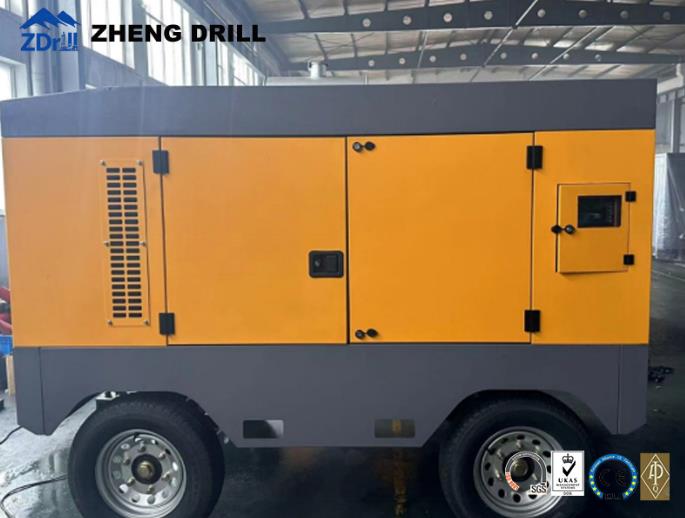
Air consumption is commonly expressed in cubic meters per minute (m³/min) or cubic feet per minute (CFM). When comparing different compressor models, buyers should check that the quoted airflow figures use comparable measurement conditions.
A practical selection process includes:
Confirm the air consumption required by the DTH hammer or other pneumatic drilling tools.
Check the drilling rig's recommended operating parameters.
Consider the required airflow for removing cuttings from the borehole.
Account for pressure losses and the operating environment.
Verify that the compressor can provide the required pressure and airflow simultaneously.
Do not select a compressor based only on its maximum airflow figure. The available airflow at the required working pressure is more relevant to actual drilling performance.
Different drilling methods have different power and air-supply requirements. Identifying the intended drilling method before purchasing equipment can prevent configuration problems later.
Down-the-hole hammer drilling is commonly used for boreholes in rock formations. Compressed air powers the hammer and helps carry rock cuttings toward the surface.
For this application, the compressor should match the hammer's specified pressure and airflow requirements. The drilling depth, hole diameter, hammer size, and rock conditions must also be considered.
A suitable DTH drilling air compressor can support stable hammer operation, but compressor selection alone cannot guarantee drilling speed. Drill bit condition, feed pressure, operator experience, and geological conditions also influence performance.
Rotary drilling systems using drilling fluid generally depend on a mud pump to circulate the fluid and remove cuttings. Their main operating requirements differ from those of pneumatic DTH systems.
Some projects may use different drilling methods at different stages or under changing geological conditions. Buyers should confirm whether the proposed rig uses air drilling, mud circulation, or a configuration that supports more than one method.
A compressor should not be added to a mud-drilling setup simply because it is available. The complete drilling plan should determine the necessary equipment.
The following examples illustrate why compressor selection should be model-specific.
The official ZD600 Water Well Drilling Rig page lists these technical parameters:
| Parameter | Published specification |
|---|---|
| Maximum drilling depth | 600–700 m |
| Drilling diameter | 105–500 mm |
| Working air pressure | 1.05–4.5 MPa |
| Air consumption | 16–60 m³/min |
| Drill pipe length | 3 m, 4.5 m, 6 m |
| Drill pipe diameter | 102 mm / 114 mm |
| Lifting force | 45 T |
These are the published specifications for the drilling rig, not a recommendation to use every listed pressure and airflow value simultaneously for every project. The final compressor configuration must be matched to the selected drilling method, tooling, and working conditions.
For example, a project using a particular DTH hammer may require a specific operating point within the rig's stated range. Buyers should confirm that point with the manufacturer before ordering the compressor.
A compressor suitable for a relatively shallow borehole may not meet the requirements of a deeper or wider borehole.
As drilling depth increases, the project may require changes to the drilling tools, air-supply arrangement, and cuttings-removal strategy. Large borehole diameters can also increase the air volume needed for effective drilling operations.
Geological conditions are equally important. Loose soil, gravel, weathered rock, and hard rock can require different drilling methods and operating parameters.
When requesting a compressor quotation, provide the manufacturer with:
Planned borehole depth
Required finished borehole diameter
Expected geological formations
Selected drilling rig and hammer model, if known
Drilling method and project location
Daily operating hours and site conditions
This information helps the supplier recommend a configuration based on the actual application instead of relying on a general-purpose specification.
Compressor performance is only one part of the total operating cost. Drilling contractors should also evaluate transportation, fuel use, maintenance access, and spare-part availability.
A compressor that operates outside its appropriate working range may consume more fuel than expected. Compare fuel consumption at the intended operating pressure and airflow instead of relying only on the engine's rated power.
For projects in remote areas, the compressor may need to travel between multiple drilling sites. Consider its dimensions, weight, mounting arrangement, and compatibility with the drilling rig's transportation plan.
Air filters, lubricants, cooling systems, hoses, and other service items affect equipment uptime. Buyers should ask about recommended maintenance intervals and the availability of replacement parts in the destination market.
An integrated drilling unit may simplify transportation and equipment coordination, while a separate compressor may offer flexibility for contractors operating different rigs.
The right choice depends on the project schedule, available transport, service capability, and whether the equipment will be dedicated to one rig or shared across several projects.
Avoid these common mistakes when sourcing a drilling rig air compressor.
A compressor may reach the specified pressure but still provide insufficient airflow. Pressure and airflow must both satisfy the drilling tool's operating requirements.
Different suppliers may quote airflow under different reference conditions. Confirm the units and measurement basis before comparing compressor models.
The hammer and compressor should be selected as a compatible system. A mismatch can affect hammer operation and cuttings removal.
Two projects with the same planned depth may have different air requirements because of differences in diameter, rock formation, and drilling method.
Ask the supplier to confirm the drilling rig, compressor, hammer, drill pipes, and related accessories as a complete setup. This can reduce the risk of compatibility issues after delivery.
ZDrill has published a Peru water well drilling project case describing a groundwater development project connected with agricultural irrigation.
The published case identifies a project involving two drilling rigs, including crawler-mounted and trailer-mounted equipment. It highlights the importance of selecting equipment according to project requirements and local working conditions.
The public case does not specify the exact compressor model or its operating parameters. It should therefore be treated as a real project reference for equipment selection and international project planning, rather than evidence of a particular compressor configuration.
For similar projects, buyers can apply the same planning approach:
Define the groundwater development objective.
Confirm the target depth and borehole diameter.
Evaluate local geology and site accessibility.
Select the drilling method and compatible tools.
Confirm compressor pressure and airflow requirements.
Check transportation, maintenance, and operating support.
This process helps drilling contractors identify the appropriate equipment package before placing an order.
Working directly with a water well drilling rig manufacturer can help buyers coordinate the main rig and its supporting equipment.
Instead of sourcing each component without checking compatibility, international buyers can provide their project requirements and request a coordinated technical proposal.
When evaluating a supplier, consider whether the company can:
Provide technical specifications for the proposed drilling rig
Explain compressor pressure and airflow requirements
Recommend compatible drilling tools and accessories
Discuss customization based on project conditions
Provide clear configuration details for quotation and shipment
ZDrill Machinery offers water well drilling rigs and related drilling equipment for different drilling applications. Buyers can start with the official product catalog and contact the company to discuss their project requirements.
Before requesting a quotation, prepare the basic information about your drilling project. This allows the supplier to evaluate the required compressor capacity and identify a suitable drilling system.
A useful inquiry should include:
Target drilling depth: planned depth of the borehole
Borehole diameter: required diameter and any changes by drilling stage
Geology: soil, gravel, weathered rock, hard rock, or known formation details
Drilling method: DTH hammer drilling, mud drilling, or another specified method
Working location: country, terrain, and site accessibility
Equipment preference: crawler, truck-mounted, trailer-mounted, or another rig type
Supporting equipment: compressor, hammer, drill pipes, mud pump, and accessories
With these details, the manufacturer can assess the application and recommend a configuration for further technical confirmation.
Contact ZDrill Machinery through the official website to discuss water well drilling equipment and compressor requirements for your next project.
The required compressor depends on the drilling method, hammer specifications, working pressure, airflow demand, borehole diameter, and geological conditions. Confirm the required operating point with the drilling rig manufacturer before purchasing.
No. The compressor must meet the operating requirements of the selected drilling tools. Excess pressure does not automatically improve drilling performance and may be unsuitable for the equipment.
Both are important. Pressure supports the operation of pneumatic drilling tools, while airflow helps maintain their operation and remove cuttings. The required combination depends on the drilling system.
Potentially, but compatibility must be checked for each rig and drilling tool. The compressor must meet the required pressure and airflow, and its connections and operating arrangement must be suitable.
Purchasing a coordinated package can simplify compatibility checks and technical communication. However, buyers should still review the specifications, configuration, service support, and total cost before making a decision.
Selecting the right air compressor for a water well drilling rig requires more than comparing rated pressure, airflow, or engine power. The compressor must match the drilling method, hammer requirements, borehole design, geology, and working environment.
For drilling contractors and equipment distributors, confirming these parameters before ordering can help reduce configuration risks and support more reliable drilling operations.
ZDrill Machinery provides water well drilling equipment and related accessories for international projects. Share your planned drilling depth, borehole diameter, geological conditions, and preferred drilling method to discuss a suitable equipment configuration.
Hot Tags: Air Compressor for Water Well Drilling Rig, Water Well Drilling Rig Air Compressor, Air Compressor for Borehole Drilling, DTH Drilling Air Compressor, Drilling Rig Air Consumption, Water Well Drilling Equipment, Water Well Drilling Rig Manufacturer
Processing Demand Survey
x


