Shijiazhuang Zhengdrilling Machinery Equipment Co., Ltd.
Service Email: bruce@well-drillrigs.com
Bruce:+86-18603299555
 EN
 ES
 FR
 RU

A core drilling rig is judged by the sample it brings back, not the metres it puts on a clock. A deep hole with disturbed, washed-out core tells a geologist far less than a shorter hole with continuous, intact material. Our core drilling rig range is described around that goal: stable coring, accurate sample collection and configurations that match the target depth.
We start a coring enquiry with the question a geologist cares about: what does the sample need to show? Recovery rate, core condition and depth interval drive the method, the rod system and the rig. Budget and schedule follow from those answers, not the other way around.
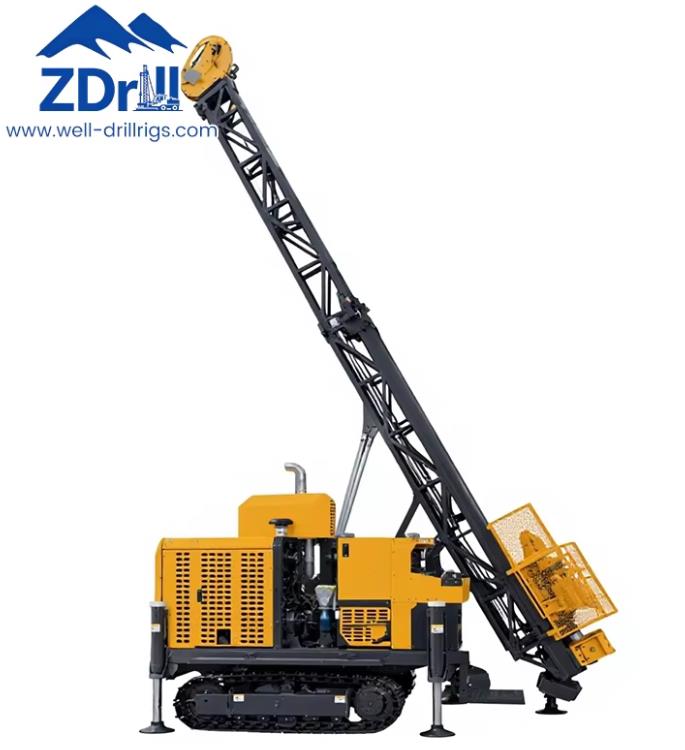
A core rig cuts an annular hole and recovers a cylindrical sample of the formation inside the bit. Unlike a water well rig that removes all cuttings, the coring assembly preserves the rock or soil structure so it can be logged and tested. The Hydraulic Core Drilling Rig in our range uses a full-hydraulic drive system and wire-line coring technology.
With wireline coring, the inner tube holding the sample is retrieved through the drill rod with a wire line instead of pulling the entire string. That reduces tripping time and limits disturbance to the core. On a deep hole the saving is substantial, because each conventional trip means breaking out and stacking every rod before the sample can be recovered and the bit returned to depth. The Core Exploration Rig uses rotary coring and is described as collecting intact samples with reliable performance and good sample quality.
The value of an exploration program sits in the assay and the log. A rig that recovers continuous, intact core gives the geologist a reliable record of grade, structure and alteration, rather than a set of fragments to interpret.
Wireline systems reduce the handling that breaks up fragile core. In fractured or weathered zones, that difference decides whether a sample can be logged at all.
The published Hydraulic Core Drilling Rig is designed for 300-2000 m coring, while the Core Exploration Rig can be customized from 150 m to 2000 m. The listed depth options include 100, 200, 300, 400, 500, 700, 800, 1000, 1200, 1600 and 2000 m, so shallow surveys and deep programs can both be specified.
A full-hydraulic drive gives the operator fine control of feed and rotation, which matters when the bit moves between soft overburden and hard ore. Stable performance and high drilling efficiency are stated for the hydraulic coring model.
The published description gives a full-hydraulic drive, wire-line coring, a 300-2000 m design range and use in geological exploration, mineral prospecting, hydrological investigation and engineering drilling. It is described as delivering stable performance, accurate core sampling and high drilling efficiency.
This model uses rotary coring, can be customized from 150 m to 2000 m, and is listed for solid mineral general survey, engineering geological investigation and inspection drilling of concrete structures. Intact core samples and good sample quality are stated.
The category page does not state core diameter, engine power, mounting or rod specification. These are items to confirm in writing for your build. Treat any number supplied verbally as provisional until it appears in a signed specification.
Coring programs need drill rods and tools. Our drill tools range, including core drilling tools, can be specified alongside the rig for a matched package.
The hydraulic core drilling rig suits deeper mineral and hydrological programs where wireline retrieval saves tripping time and protects the sample.
The Core Exploration Rig suits general survey, engineering geology and concrete inspection work, where intact samples over 150-2000 m are the goal.
For programs that also need mud circulation or wider boreholes, the mineral exploration drilling rig range can be reviewed alongside the coring options.
Core samples provide the material for grade and continuity estimates. Wireline coring keeps recovery high across the intervals that matter to a resource model.
Continuous core shows contacts, faults and alteration zones in sequence. A geologist can log the hole as a record of the formation rather than a set of disconnected points.
Foundation bores and concrete inspection need undisturbed material. The Core Exploration Rig is listed for engineering geological investigation and inspection drilling of concrete structures.
Core holes can confirm the layers above an aquifer and the integrity of the formation. The hydraulic coring model is listed for hydrological investigation work.
| Core Method and Target Matrix | |||
| Coring Approach | Typical Target | Sample Character | Published Reference |
|---|---|---|---|
| Wireline coring | Deep mineral and hydrological holes | Reduced tripping, protected core | Hydraulic Core Drilling Rig, 300-2000 m |
| Rotary coring | General survey and engineering work | Intact samples for logging | Core Exploration Rig, 150-2000 m |
| Shallow survey option | Near-surface investigation | Short cores for quick logging | Depth options from 100 m |
| Deep program option | Resource definition at depth | Continuous core over long intervals | Depth options up to 2000 m |
The method follows the sample requirement. Choose wireline when tripping time and core protection dominate; choose rotary coring for general survey and engineering work.
State the required core diameter, recovery target and interval length. Since core diameter is not published on the category page, this has to be confirmed in writing before the rig is specified.
Select from the published options and leave room for overburden and difficult layers. A rig at the edge of its depth range leaves no allowance for a longer hole.
Fractured or weathered ground rewards gentle handling and wireline retrieval. Sound, competent rock tolerates more aggressive coring.
Core recovery depends on the inner tube, bits and rods as much as the rig. Specify the tooling with the machine and confirm connections and spares.
Run the hydraulic functions and a short coring test at handover. Our technical support and training covers delivery training and on-site service.
Prepare a level pad with room for the rod rack and core handling area. A coring site needs a clean, organised layout so samples are not mixed between runs.
Level the rig before coring starts and check alignment after each rod addition. A tilted hole ruins core orientation and complicates structural logging.
Plan water or fluid supply, core storage and a logging table on site. For deep programs, confirm the compressor or pump arrangement and the spare-parts stock in advance.
We publish the 300-2000 m wireline range, the 150-2000 m rotary coring range and the depth options list. Ask for the same clarity on core diameter, engine and mounting for your build.
Ask which components change for a deeper or different-diameter configuration. A named parts list is checkable; a revised number on a brochure is not.
Ask for examples in similar rock and overburden. A rig that performs in competent rock may struggle where the core is fractured.
Confirm training, spare parts and fault response for a remote exploration site. Our support covers delivery training, on-site service and spare-part supply.
We define our coring range by the sample, not by a headline depth. The hydraulic wireline model covers 300-2000 m with reduced tripping, and the rotary exploration rig covers 150-2000 m for survey and engineering work. Where the category page does not publish a figure, we mark it for written confirmation rather than guessing. Shijiazhuang Zhengdrilling Machinery Equipment Co., Ltd. also supports OEM and ODM configurations about our product range for explorers with specific core and depth requirements.
The Hydraulic Core Drilling Rig is designed for 300-2000 m and the Core Exploration Rig can be customized from 150 m to 2000 m. Published depth options include 100 m through 2000 m. Confirm the delivered depth for your build in writing.
Wireline coring retrieves the inner tube holding the sample through the drill rod, without pulling the whole string. That saves tripping time and limits core disturbance, which improves sample quality.
The category page does not publish core diameter. This is a key specification for any coring program, so request it in writing along with the rod system and bit sizes for your build.
Wireline suits deeper mineral and hydrological holes where sample protection matters. Rotary coring suits general survey and engineering investigation. The choice follows the sample requirement and the formation.
The two methods have different goals. Our range includes separate water well and core rigs, with related tools and exploration packages. Tell the supplier what samples you need before comparing machines.
Processing Demand Survey
x


