Shijiazhuang Zhengdrilling Machinery Equipment Co., Ltd.
Service Email: bruce@well-drillrigs.com
Bruce:+86-18603299555
 EN
 ES
 FR
 RU


Choosing a PDC drill bit involves more than selecting a diameter that matches the planned borehole. The bit's cutting structure, body design, connection type and compatibility with the drilling system all influence whether it is suitable for a particular project.
For drilling contractors, equipment distributors and drilling tool buyers, an incorrect specification can lead to installation problems, inefficient operation or unnecessary replacement costs. This is especially important when purchasing drilling tools for projects with different rock formations and borehole requirements.
ZDrill supplies drilling equipment and supporting tools for water well drilling, geological exploration and other drilling applications. Its PDC bit product range includes different diameters and cutting configurations, with customized specifications available upon request.
This guide explains what buyers should check before selecting or ordering a PDC drill bit.
A PDC drill bit uses polycrystalline diamond compact cutters to remove material through a shearing action. Unlike roller cone bits, which break rock through rolling and crushing, PDC cutters work by cutting across the formation.
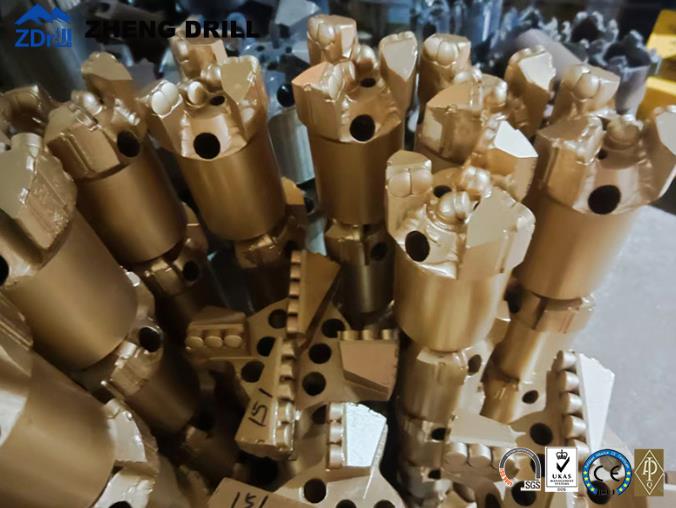
The cutting structure generally consists of several cutters arranged on the bit body. Their position, size, exposure and number influence how the bit interacts with the formation.
PDC bits are used in drilling applications where the formation and drilling system are suitable for this cutting mechanism. The exact application depends on the bit design, cutter configuration, operating parameters and equipment compatibility.
For buyers, the important point is that not every PDC bit is suitable for every drilling machine or geological condition. The bit should be selected as part of the complete drilling system.
Diameter is one of the first specifications buyers need to confirm. It determines the intended borehole size and must correspond with the drilling program and related equipment.
ZDrill's published PDC bit range includes diameters from 28 mm to 216 mm, with other specifications available on request.
Examples of listed sizes include:
| Diameter (mm) | Approximate Diameter (inch) |
|---|---|
| 65 | 2 1/2" |
| 76 | 3" |
| 89 | 3 1/2" |
| 95 | 3 3/4" |
| 102 | 4" |
| 108 | 4 1/4" |
| 114 | 4 1/2" |
| 127 | 5" |
| 146 | 5 3/4" |
| 152 | 6" |
| 171 | 6 3/4" |
| 191 | 7 1/2" |
| 216 | 8 1/2" |
The complete product specification also lists smaller diameters, including 28 mm, 32 mm, 45 mm, 54 mm and 55 mm.
Before ordering, confirm the required hole diameter from the drilling plan. The selected bit must also be compatible with the drill string and other relevant components.
For example, a bit with the correct nominal diameter may still be unsuitable if its connection or body configuration does not match the drilling equipment.
Diameter should be checked alongside:
Drill pipe and connection specifications
Drilling method and machine configuration
Required borehole dimensions
Formation characteristics
Available operating parameters
Providing these details to the supplier can help reduce specification errors before production or shipment.
Wing configuration is another specification shown in the ZDrill product range. The published size table includes options with different numbers of wings and PDC cutters.
Depending on the diameter, the listed configurations include 2-wing, 3-wing, 4-wing, 5-wing and 6-wing options.
However, a higher wing count does not automatically mean better drilling performance. The appropriate design depends on the cutter arrangement, bit structure, formation characteristics and operating conditions.
These configurations are listed for selected smaller diameters in the product range.
When evaluating them, buyers should confirm the intended application and the manufacturer's recommended operating conditions rather than selecting a configuration based on wing count alone.
Some medium and larger diameters in the published range offer four-wing or five-wing options.
The final choice should consider the required cutting structure, formation properties and the complete drilling assembly.
The published table also lists six-wing options for selected larger diameters, including 216 mm.
Buyers should request the corresponding technical drawing or configuration details to understand the actual cutter layout and ensure it meets project requirements.
The most useful approach is to provide the supplier with the target diameter, formation information and drilling equipment details before confirming the wing configuration.
PDC drill bits may use different body constructions. ZDrill's product information identifies both steel body and matrix body PDC bit options.
These terms describe different bit-body constructions, but the actual suitability of either design depends on the specific product and drilling environment.
A steel body bit uses a steel-based structure to support the cutting elements.
When evaluating this type, buyers should check:
Body dimensions and overall structure
Cutter arrangement
Connection specifications
Material and manufacturing details
Suitability for the intended drilling conditions
A matrix body bit uses a matrix-based body construction.
Its suitability should be assessed according to the manufacturer's design, the expected formation and the operating requirements of the drilling system.
There is no universal answer that applies to every project. Buyers should compare the actual bit design and technical specifications instead of relying only on the body-type name.
For a more accurate recommendation, provide the supplier with information about the formation, drilling method, target diameter and machine configuration.
PDC bits and tricone bits use different rock-breaking mechanisms. Understanding this difference can help buyers narrow down the appropriate drilling tool.
| Comparison | PDC Drill Bit | Tricone Drill Bit |
|---|---|---|
| Main working principle | Cutting and shearing | Rolling and crushing |
| Cutting structure | Fixed PDC cutters | Rotating cone assemblies |
| Selection considerations | Cutter design, formation and operating conditions | Cone structure, bearing design and formation |
| Equipment compatibility | Depends on bit and drilling system | Depends on bit and drilling system |
| Maintenance considerations | Cutter wear and body condition | Cone, bearing and tooth condition |
A PDC bit may be considered when the drilling system and formation are suitable for fixed-cutter drilling. A tricone bit may be considered for applications where a roller cone design is more appropriate.
Neither type should be selected simply because it is described as suitable for hard rock or general drilling.
The drilling method, formation characteristics, equipment configuration and manufacturer's recommendations should guide the final decision.
A drilling bit must connect correctly with the relevant drilling equipment. Connection compatibility is therefore an essential part of the purchasing process.
ZDrill's published PDC bit specifications list connection options including API, NQ, HQ, PQ, AW and AWJ, as well as customized connections upon request.
These connection names should not be treated as interchangeable. Buyers need to confirm the exact connection type, dimensions and corresponding drill string requirements.
Before placing an order, check:
Provide the exact connection specification required by the drilling assembly. If the existing equipment uses a particular connection, share its technical details with the supplier.
Confirm the relevant thread dimensions and connection details. Do not rely only on a general connection name when equipment from different manufacturers is involved.
The bit should be matched with the drill pipe, adapter or other connecting components used in the drilling system.
Confirm that the bit design is intended for the selected drilling method and operating conditions.
If the original bit is being replaced, photographs, drawings or the existing product identification can help the supplier check the specification.
The geological formation is an important factor in selecting a PDC drill bit.
Different formations can produce different levels of cutting resistance, abrasion and impact loading. A bit design that works in one formation may not be the best choice in another.
Before requesting a quotation, consider the following information.
Identify the expected formation as accurately as possible. Useful information may include rock type, hardness, abrasiveness and whether the formation is relatively uniform or mixed.
Some drilling projects pass through several geological layers. If the formation changes significantly with depth, provide the supplier with the expected geological profile.
The drilling machine, drive system and operating parameters must be compatible with the selected bit.
The cutter design and bit structure should be evaluated against the expected formation and operating conditions.
A supplier can provide a more useful recommendation when the buyer supplies actual project information rather than only requesting a general-purpose PDC bit.
International buyers sometimes focus on price and diameter while overlooking other technical details. The following issues are worth checking before confirming an order.
A matching diameter does not guarantee that the bit will fit the drilling assembly. Connection and equipment compatibility must also be confirmed.
Wing count is only one part of the bit design. The cutter layout, body structure and formation requirements are equally important.
A PDC bit should not be assumed to work with every rotary or pneumatic drilling configuration. Confirm the intended drilling method with the manufacturer.
Without formation details, it is difficult to assess whether the selected cutter structure is appropriate.
A connection mismatch can create installation problems and delay the project. Buyers should provide exact technical details or an existing sample for verification.
When comparing suppliers, check whether the quotations refer to the same diameter, wing configuration, body type, connection and included accessories.
A lower price is not necessarily a better purchase if the specifications are different.
A clear inquiry helps the supplier understand the application and prepare a more accurate quotation.
When contacting a PDC drill bit manufacturer or supplier, prepare the following details:
| Information | Details to Provide |
|---|---|
| Required diameter | Target bit diameter in mm or inches |
| Wing configuration | Required wing or cutter arrangement, if known |
| Body type | Steel body or matrix body, if specified |
| Connection | API, NQ, HQ, PQ, AW, AWJ or other confirmed type |
| Drilling application | Intended project and drilling purpose |
| Formation | Expected rock type and geological conditions |
| Drilling equipment | Machine model and drilling system |
| Quantity | Required order quantity |
| Customization | Special dimensions or connection requirements |
If you do not know the exact wing configuration or body type, you can send the drilling equipment model, existing bit information and project conditions first.
The supplier can then review the available specifications and confirm which options may be suitable.
ZDrill provides drilling equipment and supporting tools for water well drilling, geological exploration, mining-related applications and other drilling projects.
Its product portfolio includes drilling rigs, mud pumps, air compressors and drilling tools.
The published PDC drill bit range includes multiple diameters, different wing configurations and connection options. Customized specifications can also be discussed according to project requirements.
For international buyers, distributors and drilling contractors, the selection process should begin with a clear technical specification. Sharing the target diameter, connection, drilling method and formation information helps establish whether a particular bit configuration is suitable.
Explore the ZDrill PDC Bit product page for available specifications, or visit the ZDrill drilling equipment catalog to review related products.
For a customized inquiry, provide your required dimensions and equipment information so the supplier can check the available configuration.
The published product range includes diameters from 28 mm to 216 mm, with other sizes available upon request. Buyers should confirm the current availability and technical specifications before ordering.
They use different body constructions. The appropriate choice depends on the specific design, formation conditions and drilling requirements. Buyers should request detailed product information before selecting one.
The appropriate wing configuration depends on the bit diameter, cutter arrangement, formation and drilling system. A higher wing count does not automatically provide better results.
ZDrill's product information indicates that customized specifications can be requested. Buyers should provide the required diameter, connection and application details for confirmation.
No. Their suitability depends on the cutter design, formation characteristics and operating conditions. The drilling tool should be selected according to the actual project requirements.
The published specification lists API, NQ, HQ, PQ, AW and AWJ options, as well as customized connections. The exact connection dimensions should be confirmed before purchase.
Provide the required diameter, connection, drilling method, equipment model, formation information and order quantity. If available, include a technical drawing or photograph of the existing bit.
Selecting a suitable PDC drill bit requires more than matching the borehole diameter. Buyers should also consider the wing configuration, body construction, connection type, formation conditions and compatibility with the drilling system.
For drilling contractors and distributors, confirming these details before ordering can help reduce specification mismatches and make equipment purchasing more efficient.
Contact ZDrill with your drilling requirements to discuss available PDC bit sizes and configurations.
Processing Demand Survey
x


