Shijiazhuang Zhengdrilling Machinery Equipment Co., Ltd.
Service Email: bruce@well-drillrigs.com
Bruce:+86-18603299555
 EN
 ES
 FR
 RU


A new rig can stop short of the water table for a simple reason: the pump beside it cannot clear the hole. Buyers compare depth ratings and engine power, then discover that returns, pressure or pipe connections were never matched. We build borehole drilling equipment as one specification, starting with the hole you need and working back to circulation, air, tooling and the rig itself.
We start from the borehole programme, not the catalogue. Published figures for the ZDSPJ1000 give us a 1000 m depth, a 500 mm hole and a 3NB-130 pump moving 8.4–16.6 L/s at 10 MPa. Shijiazhuang Zhengdrilling Machinery Equipment Co., Ltd. exports drilling packages to Central Asia, the Middle East, Africa and the Americas, and we ask every buyer to bring the same data to the discussion.
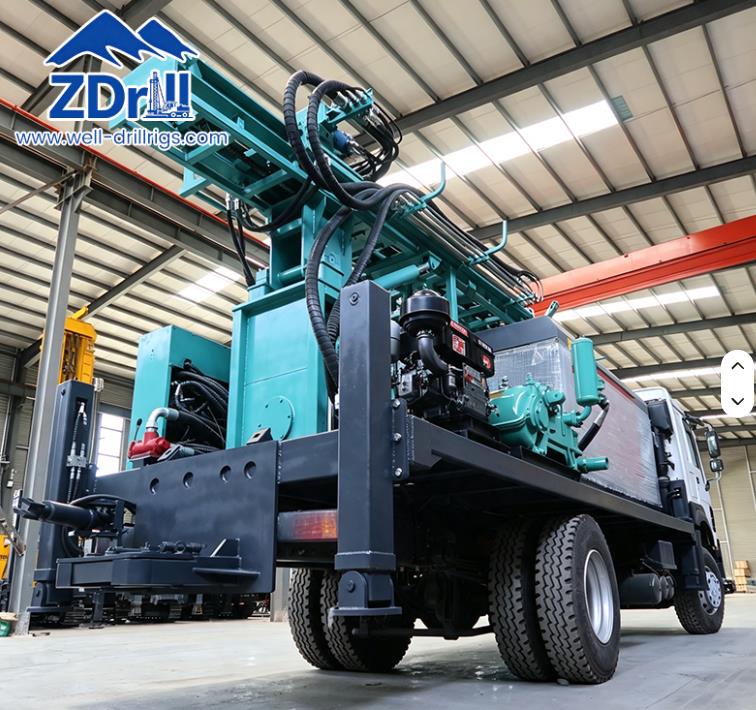
Borehole drilling equipment is the full set of machines that cut a hole and keep it clean while you drill. The rig supplies rotation and pullback. Circulation lifts cuttings; compressed air serves hammer work in rock; pipe and bits carry rig force to the formation.
On a mud rotary hole, fluid travels down the pipe and returns through the annulus, carrying cuttings to the surface. On a hammer job, air drives the bit and clears the face. In both cases the mast and winch must handle the full string weight.
We write one configuration sheet for the whole spread. Every interface then has an owner: pump flow, air duty, pipe thread and rig pullback. You compare complete offers instead of trying to join four separate quotations after the deposit is paid.
Returns fail first when a pump is small. Cuttings settle, the bit regrinds them, and depth per hour drops. We size flow and pressure against hole diameter and the return annulus, then check that the rig can turn the string at that volume.
A matched spread spends less time waiting. Jobs stall when a compressor arrives without the right hose or a pump needs a motor nobody ordered. Naming each duty up front removes those gaps from the delivery and from the invoice.
Delivery training works best when the crew sees one system, not four manuals. Our service covers on-site support, spare-part supply and vehicle maintenance, so your operator knows who to call when a component needs attention.
The ZDSPJ1000 trailer-mounted rig is published at 1000 m depth and 500 mm hole diameter, with related modules covering 300–2000 m. Those figures set a starting point. Your casing programme decides the real finished diameter and the depth margin you carry.
The 3NB-130 pump on that package delivers 8.4–16.6 L/s at 10 MPa with a 90 kW motor. The BW850-2 mud pump also appears in our range, but its flow and pressure figures need to be confirmed in writing before you design a circulation plan around it.
A 15.5 m mast, a 510 kN main winch and a 340 kN auxiliary winch define the lifting side of this package. Rotary speed comes in four steps: 48, 69, 110 and 190 r/min. Check each against the string you will actually run.
For rock work we pair the rig with DTH hammer tooling. Air demand depends on the hammer and hole size. Published ZD1600 figures put demand at 16–120 m³/min and pressure at 1.65–8 MPa, yet your hammer duty still needs a written answer.
Our drill tools cover diameters from Φ50 to Φ127 mm. Pipe length, wall thickness and thread type should be confirmed in writing against the string weight and the torque the rig can deliver. A correct diameter with the wrong connection still stops the job.
| Published figures from the ZDSPJ1000 package | |||
| Item | Rig value | Pump value | What it means for the spread |
|---|---|---|---|
| Maximum drilling depth | 1000 m | to be confirmed in writing | set your depth margin in the borehole programme |
| Drilling fluid flow | to be confirmed in writing | 8.4–16.6 L/s | match flow to hole volume and return path |
| Rated pressure | to be confirmed in writing | 10 MPa | allow for formation losses and pipe friction |
| Drive power | 259 kW, six cylinders | 90 kW motor | check site power and generator headroom |
| Rotary speed | 48/69/110/190 r/min | N/A | choose a step that suits the formation |
The trailer format uses four hydraulic outriggers and two mechanical legs, with an auxiliary cylinder for rod handling. Transport size is 16700 × 2480 × 4100 mm. It suits sites you can reach by road and crews who want one compact spread to move between wells.
Crawler chassis options carry the same rig and circulation duties across muddy or uneven ground. We ask about the access route before we suggest this mount. If a trailer can reach the pad, a crawler often adds cost without adding drilling capacity.
The BW850-5 mud pump option gives you another flow class to discuss. We do not publish its duty figures here, so ask for them in writing. The right choice follows hole diameter and the volume your return path can handle.
Village supply wells are often shallow but tightly budgeted. A compact mud rotary spread keeps consumables simple and lets a small crew work. The risk is overrating the rig and paying for capacity the aquifer never needs.
Irrigation wells need diameter as much as depth, because the pump has to fit. We start from the pump envelope, then size the hole and the circulation system. A bore that drills fast but cannot accept the pump is a failed project.
Geothermal and municipal foundation water wells can pass through mixed strata. Mud circulation handles loose layers well. When the hole enters hard rock, you need air duty and tooling that can switch method without buying a second rig.
Contractors drilling for foundation data need clean returns and controlled penetration. A matched package helps keep samples representative and the hole stable. The specification should name who supplies the pit, the fluid and the separation equipment.
Buying the rig, pump and air package from different places looks cheaper until you assemble them. Each supplier answers only for its own unit. This table shows where a single specification changes the outcome on site.
| Complete spread versus piecemeal sourcing | |||
| Decision point | One written specification | Piecemeal sourcing | Cost of a mismatch |
|---|---|---|---|
| Circulation | Pump flow and pressure tied to hole diameter | Buyer matches components later | Cuttings settle and depth per hour falls |
| Air duty | Compressor and hammer agreed together | Separate compressor quotation | Pressure shortfall stops hammer work |
| Acceptance | One commissioning hole for the whole spread | Each unit checked on its own | Weak link appears on a paid well |
| Spare parts | One list, one contact | Several lists, several contacts | Idle days while parts are located |
A matched spread does not remove every field problem. Geology still changes, and wear still happens. What it does remove is the argument about whose equipment caused the delay, because every duty was written down before the order.
Write the finished diameter first, then work back to the hole you must drill. Add casing clearance and a depth margin. Only then compare rigs, because two machines with the same depth rating may open very different diameters.
Engine power sells rigs; return flow finishes wells. Ask for pump curves at your expected depth and check the annulus velocity your cuttings need. If the numbers stay vague, treat the quotation as incomplete.
When rock is in the plan, ask for hammer model, operating pressure and air consumption in the same document. A rig that drills well in clay can still struggle once you add a hammer with no air budget behind it.
List the string you intend to run, including joint length and connection type. Compare that with mast stroke and winch capacity. Our published Φ50–Φ127 mm range is a guide, not a substitute for your string calculation.
Put one trial hole in the contract and state what counts as success: depth reached, hole diameter held and circulation maintained. A short written test finds a weak component cheaper than the first production well.
Level the pad and deploy every outrigger before the mast rises. On the trailer package, four hydraulic legs and two mechanical legs share the load. Soft ground under one leg can twist the mast and ruin hole alignment.
Lay out the pit and return channel before the first rod goes down. The 3NB-130 needs a steady feed and a clear discharge. A pit that is too small sends cuttings back into the hole instead of away from it.
Confirm generator capacity, fuel supply and road access during planning. The package carries a 259 kW diesel engine and a 90 kW pump motor. You need to know how those loads are supplied on your site.
Ask which numbers come from a published page and which are estimates. Depth, hole diameter, pump flow and mast height should be traceable. Where a value is not published, write "to be confirmed in writing" rather than guess.
We support OEM and ODM requests and accept special configurations, including colour. Ask any supplier to state what is standard and what is built to order. A custom chassis changes delivery and spare-part planning.
Request the machinery test report and the serial numbers that match it. For compact rigs we can provide a Machinery Test Report. Evidence tied to a machine is worth more than a general catalogue statement.
Ask who trains your crew, who stocks wear parts and how on-site service is arranged. Our service includes delivery training and spare-part supply. Those answers matter more after month one than a small price difference.
ZDrill Machinery supplies rigs, pumps and drill tools, so the spread can be specified as one system. We were founded in 1997 in Shijiazhuang, Hebei, and we export to Central Asia, the Middle East, Russia, South America, North America, Africa and Southeast Asia.
We publish figures where we have them and mark the rest for written confirmation. Our company background covers independent research, manufacturing, export and one-stop technical service. Bring the borehole programme, and we will answer with a configuration rather than a depth claim.
It includes the rig, a circulation or air system, drill pipe, bits and the support items that keep them running. On a mud rotary job the pump and return pit matter as much as the mast. Ask the supplier to list every item that ships, because the word "rig" alone leaves half the spread unspecified.
Often yes, but only after you match flow, pressure and pipe connections to the hole you drill. An oversized pump wastes fuel; an undersized one leaves cuttings in the hole. Send your current rig's mast stroke and winch rating, and ask for a written pump duty before you order.
The published maximum is 1000 m with a 500 mm hole diameter. Related modules are listed from 300 to 2000 m. That number describes the machine, not your ground. Formation, casing programme and circulation all change what you will reach, so treat the figure as a starting point for discussion.
Not in the facts available for this guide. The BW850-2 and BW850-5 pumps are in our range, but their flow and pressure ratings need to be confirmed in writing. We would rather state that than quote a number you could not reproduce at the well site.
It should prove that the whole spread reaches the planned depth, holds the hole open and clears cuttings at a steady rate. Agree the test conditions in advance and record them. A short trial with clear acceptance terms finds a weak component far earlier than the first paid well.
Processing Demand Survey
x


