Shijiazhuang Zhengdrilling Machinery Equipment Co., Ltd.
Service Email: bruce@well-drillrigs.com
Bruce:+86-18603299555
 EN
EN ES
ES FR
FR RU
RU

Mud circulation plays an important role in many water well drilling operations. The drilling fluid helps carry cuttings out of the borehole and, under suitable conditions, supports borehole stability. To maintain an effective circulation system, contractors need a mud pump that matches the drilling rig, borehole design, and geological conditions.
The BW850 mud pump for water well drilling is a product option for contractors who need a high-flow mud circulation system for compatible drilling applications. Before purchasing, buyers should evaluate the pump's rated flow, working pressure, fluid requirements, connection dimensions, and compatibility with the drilling equipment.
For drilling contractors, equipment distributors, and international buyers, understanding these specifications can help prevent mismatched purchases and simplify equipment planning.
This guide explains the main considerations when selecting a BW850 mud pump and how to evaluate a suitable water well drilling mud pump supplier.
A BW850 mud pump is designed to deliver drilling fluid through a circulation system. Depending on the complete drilling configuration, the fluid can help transport cuttings from the borehole, cool the drilling tools, and support borehole stability.
Mud pumps are used in various drilling and construction applications, including compatible water well drilling rigs, geological exploration projects, and foundation work.
Typical applications may include:
Water well drilling: Circulating drilling fluid during suitable drilling operations.
Agricultural irrigation wells: Supporting mud drilling systems used in groundwater development.
Geological prospecting: Providing fluid circulation where required by the drilling method.
Foundation grouting: Supporting compatible fluid delivery and grouting operations.
Water conservancy construction: Supplying drilling fluid for suitable construction processes.
The appropriate pump depends on the required flow rate, pressure, fluid characteristics, and operating conditions. Buyers should not assume that one pump configuration is suitable for every drilling rig or drilling method.
For projects that use pneumatic down-the-hole drilling without mud circulation, a mud pump may not be required for the main drilling process. The equipment package should therefore be selected according to the actual drilling method.
When comparing a BW850 mud pump supplier, buyers should examine the complete technical specification rather than relying only on the model number.
ZDrill's product catalog lists the BW850-2 mud pump with a maximum flow rate of 850 L/min and a rated pressure of 2 MPa. The catalog describes it as a horizontal double-cylinder pump with two speed shifts, intended for compatible drilling and construction applications.
These published figures provide a starting point for equipment evaluation. The actual operating point depends on the pump configuration, fluid conditions, system resistance, and operating speed.
Before purchasing, confirm the following details with the supplier:
Maximum and operating flow rates.
Rated working pressure.
Available speed settings.
Pump drive and power requirements.
Inlet and outlet connection dimensions.
Suitable drilling fluid characteristics.
Recommended maintenance and spare parts.
Compatibility with the intended drilling rig.
A pump's maximum flow rate should not be interpreted as the flow it will deliver at every pressure. Contractors should review the operating requirements of the complete circulation system before confirming a model.
For current product information, visit the ZDrill official product catalog.
Selecting a mud pump for a water well drilling rig requires coordination between the pump and the drilling system.
A pump that does not meet the required flow or pressure may affect drilling fluid circulation. Conversely, a pump with unnecessarily high capacity may increase purchase and operating costs without providing a practical benefit.
The required flow rate depends on the drilling method, borehole diameter, drill pipe configuration, fluid properties, and drilling conditions.
Before choosing a pump, ask the drilling equipment manufacturer to specify the required flow range for the intended setup.
Do not select a pump solely because its maximum flow rate appears high enough. The operating flow under the expected working conditions is more useful for equipment matching.
Pressure requirements vary with the circulation system, fluid characteristics, pipe dimensions, and borehole configuration.
Buyers should compare the pump's rated pressure with the system's actual operating requirements and confirm that the selected components are suitable for the expected pressure.
The maximum allowable pressure of the complete system must not be exceeded.
The pump must be compatible with its power source and drive arrangement.
Confirm the required motor or engine power, operating speed, transmission arrangement, and installation requirements. If the pump is being added to an existing drilling rig, provide the supplier with the current system specifications.
Inlet and outlet connections, hoses, pipe dimensions, and mounting arrangements should be checked before ordering.
This is especially important when replacing an existing pump or combining equipment from different suppliers.
A detailed technical review can help prevent installation problems and reduce the risk of delays after delivery.
Truck-mounted drilling rigs are used by contractors who need to move drilling equipment between suitable project locations.
A compatible mud pump for a truck-mounted drilling rig can form part of the circulation system when the selected drilling method requires drilling fluid.
However, the pump should not be chosen based on the chassis type alone. The drilling rig's hydraulic or mechanical arrangement, power requirements, target depth, borehole diameter, and drilling method all influence equipment selection.
Before ordering a pump for a truck-mounted rig, check:
The rig model and its current configuration.
The required drilling fluid flow and pressure.
The pump drive and installation arrangement.
Available space and mounting dimensions.
The intended drilling method and borehole design.
Whether the pump is included with the rig or supplied separately.
For example, ZDrill lists the ZDSPJ800 Truck-Mounted Drilling Rig, a direct rotary drilling system designed for large-diameter boreholes and mud circulation applications.
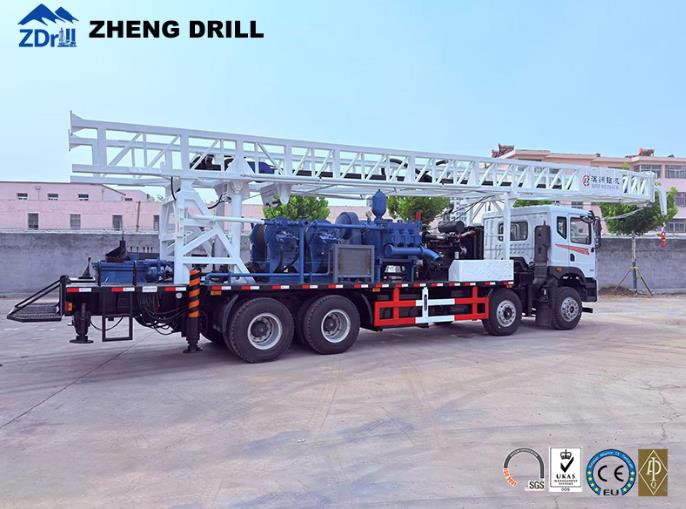
The product page provides information about the rig's configuration and mud pump system. Buyers evaluating an additional BW850 pump should confirm compatibility with their exact rig configuration rather than assume that the pump can be installed as a direct replacement.
The properties of the drilling fluid influence pump operation and the performance of the circulation system.
Depending on the drilling plan, the fluid may contain water, bentonite, polymers, or other suitable additives. Its density, viscosity, and solids content can affect flow resistance and equipment wear.
When sourcing a water well drilling mud pump, consider the following factors.
Higher-viscosity fluids can increase resistance within the circulation system. The required flow and pressure should therefore be assessed using the actual or expected fluid properties.
Drilling fluid may contain soil particles, rock cuttings, and other solids. The pump and associated components should be suitable for the intended fluid conditions.
The pump is only one part of the drilling fluid system. Mixing, storage, return flow, and solids management should also be considered when planning the equipment package.
Drilling fluid conditions can influence wear on pump components. Ask the supplier about inspection intervals, common replacement parts, and recommended maintenance procedures.
Correct pump selection should balance the requirements of the drilling process with the characteristics of the fluid being circulated.
Mud circulation and pneumatic DTH drilling serve different purposes. The right choice depends on the geological conditions, borehole design, and drilling method.
Mud drilling circulates drilling fluid through the drill string and borehole. Under suitable conditions, the fluid carries cuttings and helps support borehole stability.
A mud pump is a key component of this type of system.
DTH drilling uses a hammer positioned near the drill bit to break rock through impact. A compatible air compressor supplies the compressed air needed to operate the hammer and remove cuttings.
A mud pump is not automatically required for the main pneumatic drilling operation, although project-specific configurations may include additional fluid-handling equipment.
Before selecting the equipment, review:
Expected soil and rock formations.
Required borehole diameter and depth.
The proposed drilling method.
Groundwater and borehole stability considerations.
Available power and supporting equipment.
Local operating and environmental requirements.
If the geological conditions are uncertain, consult a qualified drilling professional or the equipment manufacturer before finalizing the system.
For importers, distributors, and drilling contractors, choosing a water well drilling mud pump manufacturer involves more than comparing product prices.
The supplier should be able to provide clear technical information and help buyers establish whether the pump is suitable for the intended drilling system.
Request a current specification sheet that identifies the model, rated flow, pressure, drive configuration, connections, and operating requirements.
If several versions are available, ask for a clear comparison between them.
Ask which parts are commonly replaced during normal maintenance and whether these parts can be ordered separately.
For contractors working at remote sites, having suitable spare parts available can help simplify maintenance planning.
Confirm the manufacturer's inspection procedures and the documentation available before shipment.
If the project has specific performance requirements, agree on the relevant specifications before ordering.
International buyers should confirm packaging, shipping arrangements, lead time, and the documents required for the destination market.
The final quotation should identify the supplied equipment and any accessories that are not included.
Provide the supplier with details of the drilling rig, expected flow and pressure requirements, fluid characteristics, and intended application.
A supplier that can review these requirements can help buyers make a more informed selection.
Equipment selection becomes clearer when the drilling system is considered in the context of an actual project.
ZDrill has published a 2025 project case involving water well drilling for agricultural irrigation and rural water supply in Chile. The published account describes the customer's application requirements and the preparation of a drilling solution.
The project involved groundwater development for agricultural irrigation and rural water supply. Equipment selection needed to consider the working environment, geological conditions, and the requirements of the planned drilling operation.
According to the published case, the equipment solution was prepared around the customer's requirements, with attention to the drilling system, supporting equipment, and project preparation.
For a drilling system that uses mud circulation, the pump's flow and pressure must be matched to the rig, borehole design, and fluid conditions.
The published case does not confirm that a BW850-2 pump was used in this project. It also does not provide a verified pump performance result or a quantified improvement in drilling efficiency. These details should not be inferred.
The project highlights several practical points for contractors planning a similar system.
Define the drilling requirements first. The target borehole, geological conditions, and drilling method determine the required circulation equipment.
Confirm the complete configuration. A pump should be evaluated together with the rig, drill pipes, circulation lines, and other relevant components.
Verify specifications before shipment. Buyers should confirm the exact pump model, technical data, included accessories, and delivery documentation.
Read the Chile water well drilling project case study for additional project context.
A detailed inquiry helps the supplier determine whether the BW850-2 or another pump configuration is appropriate.
When contacting a BW850 mud pump supplier, prepare the following information where available:
Application: Water well drilling, geological prospecting, or another compatible use.
Drilling rig model: The exact rig model and current configuration.
Required flow rate: The expected operating flow, not just the maximum desired capacity.
Working pressure: The operating pressure required by the circulation system.
Fluid characteristics: Expected fluid type, viscosity, and solids content.
Power source: Required motor or engine arrangement.
Connections: Inlet, outlet, mounting, and pipe dimensions.
Purchase quantity: One pump, several units, or a larger equipment order.
Spare parts: Any additional components required for maintenance.
Delivery details: Destination country, delivery schedule, and applicable shipping requirements.
If the pump is intended to replace an existing unit, provide the original pump model and technical data. Photographs of the nameplate and connections may also help the supplier review compatibility.
Before confirming the order, request a written quotation with the model, specifications, included components, warranty terms, and delivery arrangements.
supplies water well drilling equipment and supporting products for groundwater development, agricultural irrigation, geological exploration, and other drilling applications.
Its product catalog includes drilling rigs, mud pumps, air compressors, and drilling tools for different equipment configurations.
Buyers looking for a mud pump for water well drilling can review the ZDrill official product catalog, which lists the BW850-2 mud pump and its published flow and pressure specifications.
For projects requiring a complete drilling system, the ZDSPJ800 truck-mounted drilling rig provides another reference for understanding how mud circulation equipment fits into a larger drilling configuration.
Before purchasing, confirm the current product specifications and compatibility requirements directly with the supplier.
ZDrill's published product catalog lists a maximum flow rate of 850 L/min and a rated pressure of 2 MPa for the BW850-2. Buyers should confirm the current specification sheet and the expected operating point before ordering.
No. Compatibility depends on the rig configuration, required flow and pressure, drive arrangement, fluid conditions, and connection dimensions. Confirm the complete system requirements before purchasing.
Not necessarily. Pneumatic DTH drilling primarily relies on a compatible air compressor and hammer system. A mud pump is used when the selected drilling process requires fluid circulation.
Provide the rig model, required flow and pressure, drilling method, fluid characteristics, power requirements, connection dimensions, and intended application.
In many cases, a pump can be purchased separately. However, buyers should confirm compatibility with the existing drilling system and identify any additional components required for installation.
Compare technical specifications, component compatibility, quality inspection procedures, spare parts availability, warranty terms, delivery arrangements, and the clarity of the quotation.
Choosing a BW850 mud pump for water well drilling requires a clear understanding of the drilling method, required flow and pressure, drilling fluid characteristics, and the configuration of the complete circulation system.
For contractors and distributors, the most effective purchasing approach is to confirm these requirements before comparing quotations. A technically suitable pump can help support the intended drilling process, while a clearly defined equipment list can reduce compatibility issues during installation and operation.
To review the available equipment and discuss your project requirements, visit the ZDrill product catalog and request confirmation of the current BW850-2 specifications.
bw850 mud pump for water well drilling, bw850 mud pump supplier, water well drilling mud pump manufacturer, 850 l/min mud pump, mud pump for truck mounted drilling rig, drilling mud pump specifications, water well drilling equipment supplier, mud pump for borehole drilling
Processing Demand Survey
x


