Shijiazhuang Zhengdrilling Machinery Equipment Co., Ltd.
Service Email: bruce@well-drillrigs.com
Bruce:+86-18603299555
 EN
 ES
 FR
 RU

A vague request for quotation invites a vague answer, and the gap usually shows up at casing time. We review borehole specifications for a living, and the same omissions appear again and again: no geology, no finished diameter, no statement of where the water-bearing layer actually sits. Contractors then compare prices that describe different jobs.
We are Shijiazhuang Zhengdrilling Machinery Equipment Co., Ltd., and we ask every bidder to answer the same written questions. That discipline is what this checklist gives you. Published figures for the ZD1600 and our reverse circulation rigs show what a supplier can state without a follow-up email, and what still needs written confirmation.
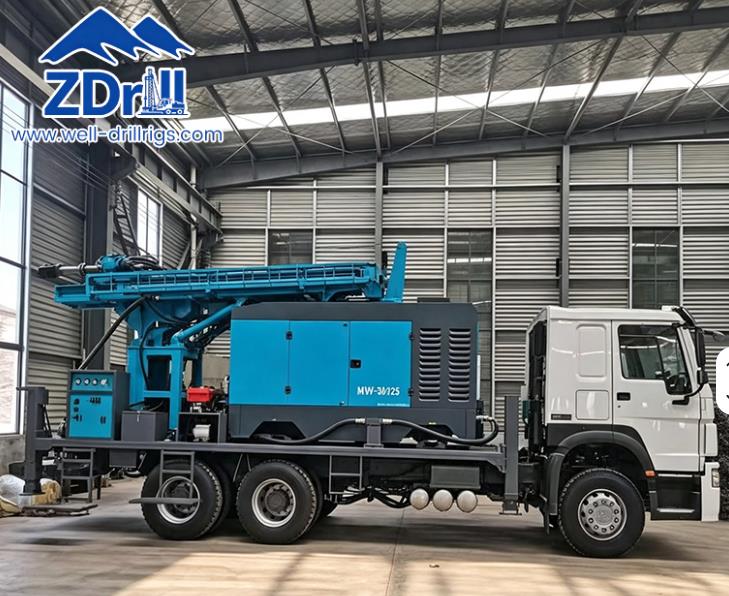
A borehole rig is a mast, a rotation head, a hoist and a circulation system on one frame. The frame may be a crawler, a truck or a trailer. The mast sets the single-pipe stroke; the hoist carries the string; the pump or compressor clears the cuttings. Each part limits the hole in a different way.
The bit cuts, the string turns, and fluid or air lifts the cuttings to the surface. In loose layers, drilling mud holds the wall open until casing goes in. In rock, a hammer or a reverse circulation drilling rig may replace the mud. The method you name in the RFQ decides the equipment list.
Tender documents pass between people who never visit the site. A clear borehole description travels intact. State the target depth, the expected formations and the finished diameter in the same paragraph. If those three lines are missing, every bidder fills the gap with an assumption.
Casing is where a cheap quote becomes expensive. A rig that reaches depth but cannot cut the diameter for your screen means a second mobilisation. Write the casing programme into the enquiry and ask for the delivered hole size.
Mud rotary, hammer and reverse circulation solve different problems. Pick the method from the geology, not from a catalogue. We will tell you when a machine in our range suits the formation you describe.
Send the same questions to every bidder and require the same reply format. Depth, diameter, method, pipe and included equipment become columns you can line up. Once the columns match, a low price is easier to trust and a high one is easier to challenge.
The ZD1600 publishes a maximum depth of 1600 metres. The ZD-2000 publishes 2000 metres in its standard version and can be configured from 150 to 2000 metres. Those figures describe a rig class. Ask which formation, hole diameter and pipe string the number was measured with.
The ZD1600 covers a borehole range of 127–700 mm, while the ZD-2000 publishes 500 mm. Loose layers and reverse bedrock layers are the stated conditions for the deeper rig. Match those diameters to your casing outside diameter before you compare prices.
On the ZD1600 the published working pressure runs from 1.65 to 8 MPa and air consumption from 16 to 120 m³/min. Those numbers set the compressor you need. Reverse circulation is a different duty; our reverse circulation drill rig range is one option. Ask the supplier to name the method beside each figure.
The ZD1600 takes 3–6 metre pipe at 114, 127 or 140 mm and publishes 60 T of lifting force. The ZD-2000 uses 3 × 6 metre pipe at 102, 114 or 127 mm with 100 T lifting force and a 6.6 metre mast stroke. Thread type still needs written confirmation.
The ZD-2000 ships at 6800 × 2500 × 3000 mm and 21 t. Put those figures in the contract. ZD1600 options include a mud pump, welding generator, reamer and air compressor. State which ones your price includes.
| Published depth and diameter figures | ||||
| Rig | Maximum depth | Borehole diameter | Drill pipe | Lifting force |
|---|---|---|---|---|
| ZD1600 | 1600 m | 127–700 mm | 3–6 m; 114/127/140 mm | 60 T |
| ZD-2000 | 2000 m standard | 500 mm | 3×6 m; 102/114/127 mm | 100 T |
| Site requirement | to be confirmed in writing | to be confirmed in writing | to be confirmed in writing | to be confirmed in writing |
Crawler frames carry the mast over rough ground and keep it stable at depth. Our ZD1600 deep well rig publishes 12000–24000 N·m of torque, a 75–160 r/min head and 20 T of thrust. It works in unconsolidated strata, bedrock and hard rock, with rotary, DTH or mud methods.
Reverse circulation suits projects that need cleaner samples or work through loose and reverse bedrock layers. The ZD-2000 is published at 2000 metres with that method. Confirm how sampling, pipe recovery and cuttings handling are arranged before you sign.
On paved routes with frequent moves, a truck or trailer frame saves setup time. Our wider range includes truck-mounted rigs for 200–2000 metre duties. Confirm detailed figures in writing.
Village boreholes are often shallow and tight on space. A simpler rig reaches them, but the casing programme still needs writing down. Our project case records describe regional borehole work. We report what was supplied, not results we cannot document.
Irrigation bores need diameter for the pump and depth for the season. Ask for the finished hole size before the rig. A deeper hole with the wrong diameter does not deliver more water.
Shallow geothermal and foundation water holes are numerous and close together. Mobility and fast setup matter more than extreme depth. The ZD-2000 is listed for municipal foundation water exploration and shallow geothermal work.
Deep targets bring torque, lifting force and air demand into the same calculation. The ZD1600 figures show the scale: 264 kW engine, 4 T main winch and 1.5 T auxiliary winch. Check each number against your string weight.
A price-first tender rewards the shortest sheet, not the best-defined job. Both bids can look identical until the hole is cased. The table shows what changes when the scope is written before the price is requested.
| Price-first tendering against a defined scope | |||
| Tender line | Price-first approach | Defined-scope approach | Reply required from supplier |
|---|---|---|---|
| Geology | Assumed from region | Described in the RFQ | Name the method for each layer |
| Depth claim | Headline metres only | Conditions attached | State hole and pipe used |
| Casing | Decided after drilling | Fixed before the quote | Confirm finished diameter |
| Included items | Listed later | Included in the comparison | State what ships |
None of this removes price from the decision. It makes the price comparable. A supplier who answers in your format, including the lines it cannot meet, is easier to audit than one who sends a single number.
Write the profile as layers with approximate depths. Clay to twelve metres, gravel to forty, weathered rock below: that level of detail is enough. A supplier can name a method from it. A single word like 'rock' cannot support a quote.
State the screen outside diameter, the casing joint type and the annular space you need. Then check the rig's published hole range. The ZD1600 range of 127–700 mm is useful only if your target sits inside it.
A target depth is a plan, not a guarantee. Add a margin that reflects how certain the log is. Ask the supplier to state the depth rating with its conditions instead of a bare number. The margin costs less than a second rig.
Add pipe weight, casing weight and the expected pull load. Compare that total with the published lifting force. A 60 T figure sounds generous until the string and friction are counted. Ask what the figure includes.
Send a blank table with the RFQ and ask for it back filled in. Include method, depth with conditions, diameter, pipe and included equipment. Refuse to compare a completed sheet with a brochure. The discipline is yours to enforce.
Clear a working area around the hole and check the route the rig must travel. A crawler handles soft ground; a truck needs a road. Measure the turning radius before delivery. Access mistakes are expensive once the machine is on site.
Level the frame and plumb the mast before the first pipe. Place the mud pit or air line where the return can flow without a long run. Keep the hoist path clear. A tidy rig down takes less time to correct.
We include delivery training with our machines. Use it to set routines for pipe handling, levels and daily checks. Ask for the spare-part list at the same session. The earlier your crew knows the wear items, the fewer idle days later.
Domestic supply, irrigation and geothermal loops need different diameters and pump settings. Decide the end use first. It sets the screen, the casing and the hole size, and those set the rig.
A deeper rig is not automatically more useful. If your sites are close and shallow, a mobile unit that moves twice a day wins. If you drill one deep bore per month, torque and hoisting capacity matter more.
Request the test report and the configuration sheet with the quote. Match the serial number on arrival. Keep everything in one buyer file. This is the record you will use when you order pipe or claim under warranty.
Ask who supplies wear parts and how fast they can be identified. Contact our team with the rig model and serial number to start that file. A supplier who can name the part from the serial saves a week of guessing.
We publish figures that can be checked: 1600 metres, 127–700 mm and 16–120 m³/min on the ZD1600; 2000 metres and 100 T lifting force on the ZD-2000. Where a detail is not public, we mark it to be confirmed in writing. We would rather lose a bid on a missing number than win one on a guess.
We ask for the same RFQ information from every buyer because it protects both sides. Our services include pre-sale consultation, delivery training, on-site service and spare-part supply. Send your borehole specification and we will answer in your format, line by line.
List target depth, formations by depth, finished hole diameter, casing plan and expected method. Add site access and your required date. Five clear lines let every bidder answer the same question.
Only as a rough indication. A depth figure without hole diameter, pipe and formation conditions cannot support a purchase. We will mark anything unconfirmed in writing. Give us the ground profile and we will attach conditions to the number we send.
It changes how cuttings and samples come out of the hole and what equipment handles them. The ZD-2000 is published for loose layers and reverse bedrock layers. Confirm sampling and recovery arrangements before you assume it suits your bore.
Rewrite both into one table with the same headings: method, depth conditions, diameter, pipe, lifting force and included items. Blank cells become questions. The quote that answers every line is safer, even if not the lowest.
As soon as you have a log or a reliable description of the layers. Early enquiries leave room to change the method or chassis. Waiting until the casing is ordered locks you into a rig choice made on incomplete information.
Processing Demand Survey
x


