Shijiazhuang Zhengdrilling Machinery Equipment Co., Ltd.
Service Email: bruce@well-drillrigs.com
Bruce:+86-18603299555
 EN
 ES
 FR
 RU

Agricultural irrigation, rural water supply, and groundwater development projects often require drilling equipment that matches local geological conditions and site access requirements. For drilling contractors and project owners, choosing the right water well drilling rig involves more than comparing maximum drilling depth or machine price.
The drilling method, borehole diameter, formation characteristics, transportation conditions, and supporting equipment all influence the final configuration. A rig that works well on an accessible agricultural site may not be the most practical choice for a remote location with uneven terrain.
ZDrill Machinery, operated by Shijiazhuang Zhengdrilling Machinery Equipment Co., Ltd., supplies drilling equipment for groundwater development and other drilling applications. This guide explains how to evaluate a water well drilling rig for agricultural and rural water projects, with a reference to ZDrill's published Peru project.
A water well drilling rig is designed to construct boreholes for groundwater exploration and water supply. Depending on the machine configuration and drilling method, it can support a range of projects.
Common applications include:
Agricultural irrigation: Developing groundwater sources for farms, greenhouses, and agricultural facilities.
Rural water supply: Constructing boreholes for community and residential water systems.
Livestock water supply: Supporting water access for livestock farms and remote agricultural operations.
Construction and industrial water: Developing water sources for suitable construction sites and industrial facilities.
Groundwater investigation: Drilling boreholes to investigate groundwater conditions, subject to the project's technical requirements.
The required equipment varies by application. Before choosing a rig, buyers should define the target depth, borehole diameter, expected geological conditions, and intended water use.
Different drilling projects require different equipment configurations. The following factors can help buyers narrow down their options before requesting a quotation.
The required borehole depth is one of the first specifications to establish when purchasing a water well drilling machine.
A project targeting a relatively shallow borehole may have different equipment requirements from one involving deeper groundwater development. However, the advertised maximum drilling depth alone does not determine whether a machine is suitable.
Buyers should also consider the planned borehole diameter, drilling method, geological conditions, and the tools required for the project.
When requesting a quotation, provide the target depth range and borehole diameter so the manufacturer can evaluate a suitable configuration.
Ground conditions directly affect drilling method selection and operational requirements.
| Ground Conditions | Important Equipment Considerations |
|---|---|
| Soil and clay | Borehole stability, drilling method, and cuttings removal |
| Sand and loose formations | Borehole stability and appropriate circulation or casing arrangements |
| Gravel and mixed formations | Drilling tools, formation changes, and hole stability |
| Hard rock | Suitable rock drilling tools, hammer system where applicable, and air supply requirements |
These are general planning considerations rather than a guarantee that one rig can handle every formation. The actual method should be determined from geological information and the project's borehole design.
The rig's mobility and transportation arrangement should match the working environment.
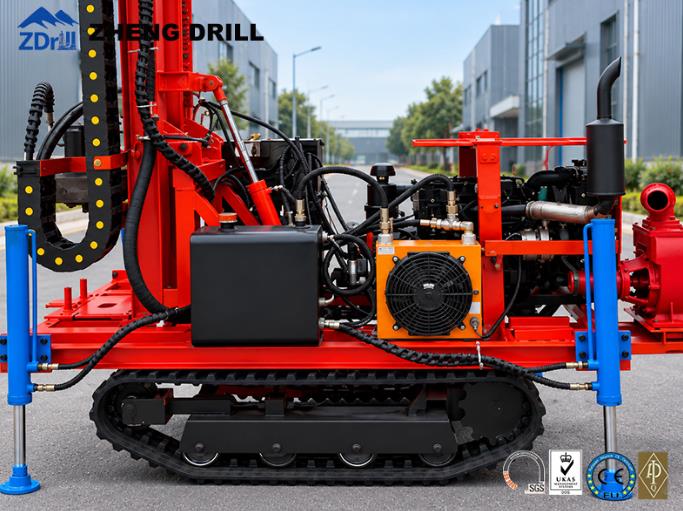
Crawler water well drilling rig
A crawler-mounted rig may be suitable for sites where uneven terrain or movement across unpaved ground is an important consideration. Buyers should confirm the machine's ground clearance, travel capability, dimensions, and site access requirements.
Trailer mounted water well drilling rig
A trailer-mounted configuration can be considered when equipment needs to be transported between project locations using a suitable towing vehicle. Buyers should check transport dimensions, weight, setup requirements, and compatibility with local road conditions.
Truck mounted water well drilling rig
For contractors moving between multiple drilling sites, a truck-mounted configuration may simplify road transportation and deployment. The appropriate vehicle and rig arrangement depend on the project, local regulations, and operating conditions.
The best option is the one that meets both drilling requirements and practical transportation needs.
A drilling rig is part of a larger drilling system. Depending on the method and geological conditions, supporting equipment may include:
Drill pipes and suitable drill bits
DTH hammer and air compressor for applicable pneumatic drilling operations
Mud pump and associated circulation equipment for suitable mud-drilling applications
Casing and borehole stabilization materials where required
Spare parts, maintenance tools, and safety equipment
Not every project needs all these components. The equipment package should be matched to the selected drilling method and site conditions.
For contractors comparing a crawler water well drilling rig with a trailer mounted water well drilling rig, the main distinction is how the equipment is transported and moved around the job site.
| Selection Factor | Crawler-Mounted Rig | Trailer-Mounted Rig |
|---|---|---|
| Movement on site | Can be advantageous on suitable uneven or unpaved terrain | Usually depends on a suitable towing vehicle and site access |
| Road transportation | Requires a suitable transport arrangement | Designed for towing when the configuration and regulations permit |
| Multiple drilling locations | Useful when site mobility is important | Useful when frequent towing between sites is practical |
| Key checks | Ground conditions, dimensions, stability, travel capability | Trailer weight, towing vehicle, road access, setup requirements |
Neither design is universally better. A contractor operating on remote farms may prioritize site mobility, while another contractor working at accessible locations may prefer a towing-based transport arrangement.
Before purchasing, confirm the machine dimensions, transport method, setup procedure, and working conditions with the manufacturer.
A published project reference can help buyers understand how drilling equipment selection relates to practical project requirements.
ZDrill Machinery has published a Peru water well drilling project case covering agricultural water well drilling and groundwater development in 2025.
| Project Item | Published Information |
|---|---|
| Project country | Peru |
| Project year | 2025 |
| Main application | Agricultural water wells and groundwater development |
| Equipment quantity | 2 units |
| Equipment types described | Crawler-mounted and trailer-mounted drilling rigs |
| Supplier | ZDrill Machinery |
The published case describes equipment selection for a drilling contractor working on agricultural and rural water supply projects. It highlights the importance of equipment mobility, drilling capability, and adaptation to different working environments.
The public case does not establish that every rig configuration is suitable for every geological condition. Final equipment selection still depends on the specific borehole design and site requirements.
For agricultural and rural water projects, several factors can influence equipment selection:
Transportation between sites: Contractors may need to move equipment between farms, rural communities, or separate borehole locations.
Ground conditions: Different formations can require different drilling tools, drilling methods, and supporting equipment.
Project application: An irrigation well and a community water-supply borehole may have different depth, diameter, and completion requirements.
Equipment configuration: The rig, drilling tools, and auxiliary equipment should be considered as a complete system rather than as separate purchases.
The Peru case provides a practical reference for understanding why these requirements should be discussed before the equipment configuration is finalized.
The main lesson is that successful equipment selection begins with the project specification.
Before requesting a quotation, buyers should prepare the target drilling depth, borehole diameter, geological information, transport conditions, and intended application. This information helps the manufacturer evaluate a more suitable configuration and clarify which accessories are required.
For a similar project, buyers can review the published Peru project details and use them as a starting point for discussing their own drilling requirements.
A structured planning process can help reduce equipment mismatches and make supplier communication more efficient.
Prepare the target depth, borehole diameter, intended water use, and any known groundwater or geological information.
If a hydrogeological survey is available, share the relevant findings with the drilling equipment supplier and the project's qualified technical team.
The drilling method should match the expected formations and borehole design. Rotary drilling, mud drilling, and DTH hammer drilling have different operating requirements.
The selected method will affect the rig configuration, drilling tools, circulation system, and auxiliary equipment.
Determine whether the drilling site can accommodate the proposed machine. Consider road access, ground conditions, working space, transport restrictions, and the need to move between multiple sites.
Ask the supplier to specify the rig model, drilling tools, power system, auxiliary equipment, spare parts, and any items that are excluded from the quotation.
This makes it easier to compare offers on a like-for-like basis.
Before shipment, clarify factory inspection arrangements, operating manuals, spare parts information, packing details, and shipping documentation.
For international buyers, clear documentation and technical communication are important parts of preparing equipment for overseas operation.
Choosing a water well drilling rig manufacturer involves evaluating more than the product catalog. Buyers should understand the supplier's equipment range, manufacturing capability, technical communication, and experience with international orders.
ZDrill Machinery's product portfolio includes water well drilling rigs, mineral exploration drilling rigs, DTH drilling rigs, air compressors, mud pumps, drill pipes, and drilling tools.
For drilling contractors, engineering companies, agricultural businesses, and equipment distributors, a supplier with a relevant product range can help coordinate the main rig with the required supporting equipment.
Before placing an order, buyers should request current technical specifications and confirm that the proposed configuration matches the intended application. Project references should also be reviewed in context: a case involving one drilling method or geological environment does not automatically prove suitability for another.
Visit the ZDrill Machinery official website to review its drilling equipment range and contact the company about a project-specific configuration.
The suitable rig depends on the required depth, borehole diameter, geology, water demand, and site access. Buyers should provide these details before selecting a model.
Not in every situation. A crawler rig may be useful where on-site mobility is important, while a trailer-mounted rig can suit projects where towing between accessible sites is practical. The choice depends on the working environment and transport arrangements.
Provide the project country, target drilling depth, borehole diameter, geological conditions, intended application, preferred drilling method if known, site access requirements, and required supporting equipment.
No. Maximum depth is only one specification. Actual suitability depends on the formation, borehole diameter, drilling method, tools, operating conditions, and the manufacturer's stated performance limits.
ZDrill's published product range includes drilling rigs, air compressors, mud pumps, drill pipes, and drilling tools. Buyers should confirm which accessories and auxiliary equipment are available for the selected rig and whether they are included in the quotation.
Selecting the right water well drilling rig requires a clear understanding of drilling depth, borehole diameter, geological conditions, transportation requirements, and supporting equipment.
ZDrill Machinery's published Peru project provides an international project reference involving agricultural water wells and rural water supply applications. It illustrates why rig selection should be based on actual project requirements rather than machine specifications alone.
For your next groundwater project, contact ZDrill Machinery with the target depth, borehole diameter, site conditions, and intended application to discuss a suitable drilling equipment configuration.
Contact ZDrill Machinery
Service Email: bruce@well-drillrigs.com
Website: https://www.well-drillrigs.com/
Hot Tags: water well drilling rig, water well drilling rig manufacturer, water well drilling equipment, agricultural water well drilling rig, rural water well drilling rig, crawler water well drilling rig, trailer mounted water well drilling rig, groundwater drilling equipment, water well drilling rig supplier
Processing Demand Survey
x


