Shijiazhuang Zhengdrilling Machinery Equipment Co., Ltd.
Service Email: bruce@well-drillrigs.com
Bruce:+86-18603299555
 EN
 ES
 FR
 RU

You have two quotations on your desk. Both promise the same depth, and the prices are far apart. The gap is rarely the steel. It is the ground behind the number and the test conditions nobody wrote down. Before you pay a deposit on a water well drilling machine, you need a way to compare claims line by line. We are a water well drilling machine manufacturer, and we ask every buyer to send the soil profile first.
A depth figure is a starting point, not a result. It changes with hole diameter, drill pipe, circulation method and the formation you actually meet. Our published range covers crawler, truck and trailer mounts, and we publish figures for individual models so you can check them. This guide turns a supplier claim into ten written checks you can attach to a quote. Ask for the same evidence from every bidder, then judge the answers.
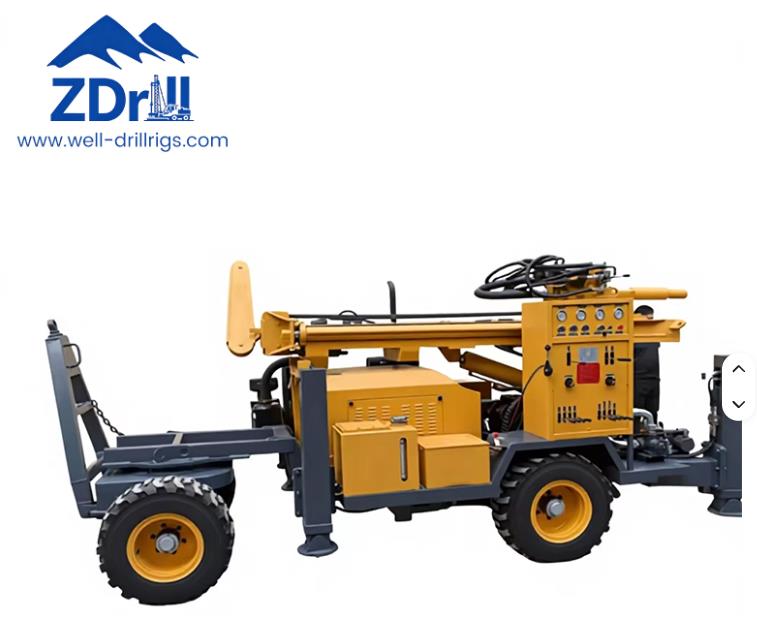
A drilling machine is a carrier, a mast, a rotary head and a circulation package working as one. The carrier moves the rig. The mast guides the pipe and takes the lifting load. The head turns and thrusts the string. Pumps and air supply clear the cuttings. We sell the machine as a configured water well drilling machine range, not as loose parts.
Most rigs in our range use top-drive hydraulic rotary and thrusting. A DTH hammer or a mud circulation system removes cuttings, depending on the formation. Depth comes from torque, lifting force and a stable hole, not from the engine alone. Ask which method the quoted machine uses in your ground.
Buyers who compare on paper need numbers with conditions attached. We publish the ZD1600 figures so you can see torque, lifting force and air demand in one place. A claim without test conditions is a conversation, not evidence.
An auditable quote lists the mast, the head, the pump and the pipe as separate lines. We ask buyers to mark any figure that cannot be backed by a machinery test report. The machine that survives that check is the one to shortlist.
Unconsolidated strata, bedrock and hard rock do not respond to the same method. A machine that can switch between mud drilling and DTH hammer work saves you a second purchase. Ask the supplier to name the method before they name the model.
Site access sets the chassis as much as depth does. A crawler handles soft ground; a truck suits highway moves. We ask for your access route with the enquiry.
Depth and diameter must be read together. Our published ZD1600 deep-well rig specification reaches 1600 m and drills 127–700 mm holes. Before you accept a depth claim, state the diameter and the casing you plan to run.
| Published ZD1600 figures for a supplier audit | ||
| Specification | Published figure | What to confirm in writing |
|---|---|---|
| Maximum drilling depth | 1600 m | Test formation and drill pipe string |
| Borehole diameter | 127–700 mm | Casing and reamer plan |
| Working pressure | 1.65–8 MPa | Compressor duty cycle |
| Air consumption | 16–120 m³/min | Compressor capacity at site altitude |
| Maximum lifting force | 60 T | Full string weight in your hole |
Air demand varies with hole size and hammer. The ZD1600 is published at 16–120 m³/min and 1.65–8 MPa. That range only helps if your compressor can hold pressure at the top of the range.
Pulling a stuck string is the moment that tests a machine. The ZD1600 publishes 60 T lifting force and a 1.7 m outrigger stroke. Ask how lifting force is rated and whether it covers the weight of your full drill pipe.
Pipe sets the depth more than the engine does. The ZD1600 uses 3–6 m pipe at 114, 127 or 140 mm, with torque of 12000–24000 N·m and 75–160 r/min. Match the pipe to your casing programme.
The published ZD1600 engine is 264 kW. Travel speed is 3.5 km/h and gradeability 35°. Ask for the engine data sheet with the quote, and treat any unlisted figure as to be confirmed in writing.
Crawler mounts suit muddy pads and uneven ground. The ZD1600 is a crawler machine at 20 t with a 6.6 m × 2.25 m × 3 m envelope. Choose this mount when the path to the well is a track, not a highway.
Truck mounts are built for long moves between sites. Our truck rigs accept established heavy-truck chassis options and cover 200–2000 m. They need a firm road and a level pad. Ask which chassis and outriggers the quote includes.
Trailer rigs are towed between short-haul sites and suit buyers who already own prime movers. The ZDSPJ1000 is a trailer-mounted option with a published 1000 m depth.
Village supply wells are often shallow and in soft layers. A smaller machine with mud circulation may be enough. We ask for the village access route and the first two metres of sample before we suggest a depth rating.
Irrigation wells need a diameter that fits the pump, not just a deep hole. Gravel and mixed strata can punish a rig chosen on depth alone. State the finished diameter and the pump you plan to install.
Industrial sites usually need a steady yield and a documented hole. That pushes the specification toward torque, circulation and pipe strength.
Geothermal and municipal foundation wells add casing and temperature questions to the depth discussion. Our product routes include deep wells and reverse circulation machines. Ask which method the quoted machine uses for your formation.
Headline depth is easy to print and hard to verify. We would rather you compare the evidence behind it. The table below sets an audited purchase against a depth-only purchase across the points that usually cause disputes after delivery.
| Headline depth versus an audited water well drilling machine purchase | |||
| Decision point | Depth-only quote | Audited quote | What you gain |
|---|---|---|---|
| Depth rating | One number, no ground stated | Depth with formation and diameter | Comparable bids |
| Compressor | Not specified | Air demand and pressure stated | Fewer stoppages on site |
| Acceptance | Verbal promise | Machinery test report attached | A claim you can check |
The depth-only quote often wins the first round and loses the second. Once the hole is underway, diameter, air and lifting force decide whether the machine finishes. That single habit removes most post-delivery arguments.
Send the first two metres and any borehole log with your enquiry. Ground conditions decide the method before horsepower does.
Choose the finished diameter and the casing, then work back to the hole. Diameter drives air demand, torque and pipe size. If you cannot state it yet, mark it to be confirmed in writing and keep the quote flexible.
Air demand must hold pressure at depth, not just at the manifold. Check the published range against your compressor. Where the supplier gives no figure, ask for one in writing rather than assuming the largest machine covers it.
Describe the road or track to the pad. Crawler, truck and trailer mounts each solve a different access problem.
Agree what counts as passing a trial before you pay. Name the test hole, the diameter and the report you will receive. We put these terms in the quotation so both sides know what a completed job means.
Level the pad and allow room for outriggers and pipe storage. The ZD1600 publishes a 1.7 m outrigger stroke; confirm what your ground needs.
Check the power supply and the fuel plan before delivery. Our published engine figure is 264 kW for the ZD1600. Confirm voltage, starting arrangement and any generator you need in writing.
Ask for delivery training with the machine. Our delivery training and on-site service covers on-site work, vehicle maintenance and spare-part supply. We aim to solve enquiries in one day and reach the field in one day, subject to location.
Ask for a single configuration sheet with every number on it. Compare the same fields across bidders. A supplier who cannot state lifting force or air demand in writing is asking you to accept the risk.
| Written checks to attach before you pay | ||
| Audit item | Evidence to request | If the evidence is missing |
|---|---|---|
| Depth rating | Test formation, diameter and pipe string | Mark to be confirmed in writing |
| Hole diameter | Casing programme and reamer plan | Do not compare the quote |
| Air demand | Compressor curve and pressure rating | Ask for a written figure |
| Lifting force | Rated string weight in your hole | Treat the claim as unverified |
| Acceptance | Machinery test report and serial number | Hold the balance payment |
Many buyers need a specific colour or a particular tool package. We accept customized colours on compact models and support OEM and ODM solutions. Put every custom item in the contract, with clear responsibility for each one.
A machinery test report is worth more than a catalogue photo. Ask for the report and the serial number that produced it. Where a sample is possible, test it on your own ground before the balance is paid.
Confirm the spare-part list and who pays for shipping. Our service includes spare-part supply and periodic return visits. Ask who trains your crew and how quickly a wear item can be replaced.
Shijiazhuang Zhengdrilling Machinery Equipment Co., Ltd. was founded in 1997 in Shijiazhuang, Hebei, China. We handle independent research and development, intelligent manufacturing, global export and one-stop technical services for drilling rig equipment. Our machines have been supplied to Central Asia, the Middle East, Russia, South America, North America, Africa and Southeast Asia. You can review our factory and design work before you shortlist a machine.
We publish model figures instead of asking you to trust a headline. Send your ground profile and access route with the enquiry, and we will answer with a written configuration.
A depth rating proves the machine reached that figure under stated conditions. It says nothing about your formation or casing. Our published ZD1600 figure is 1600 m with a 127–700 mm hole range. Ask which ground, pipe and method produced the number, then attach those conditions to the quote.
Compare the lines beneath the depth: borehole diameter, air demand, working pressure, lifting force, pipe size and engine. Put them in one table with a column for written evidence. Suppliers who answer all six give you something to audit.
It depends on the method. DTH hammer work needs air; mud circulation needs a pump. The ZD1600 publishes 16–120 m³/min air demand and 1.65–8 MPa working pressure. Confirm whether the compressor is included in the quote, and check that it holds pressure at your hole depth.
Yes. We accept customized colours on compact models and support OEM and ODM solutions. Custom tooling and chassis choices are possible, but each one must appear on the configuration sheet. Ask for the written scope before you pay a deposit, and keep it with the contract.
Send the soil profile, target depth, finished diameter, casing plan and the route to the site. You can send your soil profile to our team with the RFQ, and we will return a written configuration. If a figure is not published, we mark it to be confirmed in writing rather than guess.
Processing Demand Survey
x


