Shijiazhuang Zhengdrilling Machinery Equipment Co., Ltd.
Service Email: bruce@well-drillrigs.com
Bruce:+86-18603299555
 EN
 ES
 FR
 RU

A successful water well drilling project depends on more than the drilling machine itself. The drilling rig, power system, drilling tools, drill pipes, and supporting equipment must work together to complete borehole construction under the required operating conditions.
A Water Well Drilling Rig provides the main drilling power and controls the drilling operation. However, its actual working configuration also depends on the selected drilling method, geological formation, borehole diameter, and required drilling depth.
For drilling contractors, groundwater development companies, and equipment distributors, understanding the main Water Well Drilling Rig Components is important when purchasing a complete drilling system or upgrading existing equipment.
ZDrill Machinery supplies water well drilling rigs, mud pumps, air compressors, drill pipes, and drilling tools for different drilling applications. This guide explains the functions of these components and how to evaluate their compatibility before purchasing.
A water well drilling system consists of several major components. The exact configuration varies according to the drilling method and project requirements.
Common equipment includes:
Main drilling rig
Hydraulic or mechanical power system
Rotary and hoisting mechanisms
Drill pipes
Drill bits and drilling tools
Mud pump or air compressor, depending on the drilling method
Supporting hoses, connections, and circulation equipment
Each component performs a different function. Selecting compatible equipment helps reduce unnecessary downtime and supports more stable drilling operations.
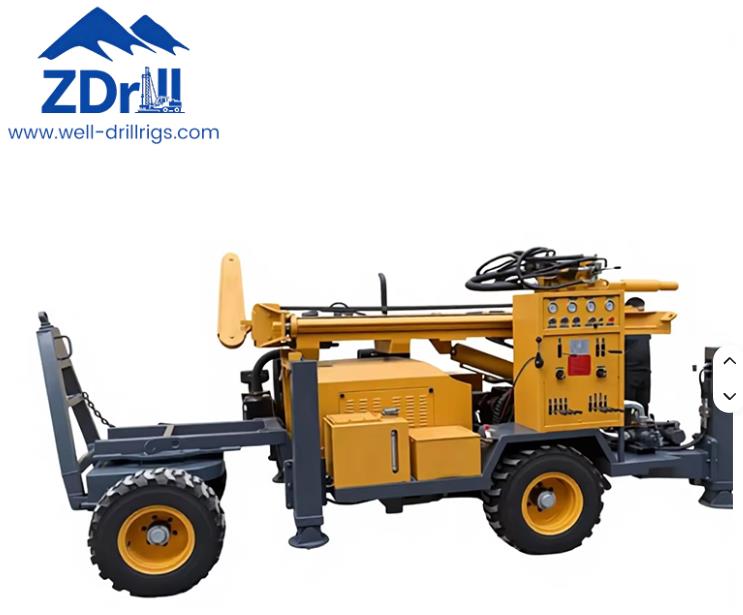
The Water Well Drilling Rig is the central machine in the drilling system.
It provides the power and mechanical functions required for drilling operations, including rotary movement, lifting, feeding, and positioning of the drill string.
Different rig configurations are available for different project requirements, including:
Crawler-mounted water well drilling rigs
Truck-mounted water well drilling rigs
Trailer-mounted water well drilling rigs
Portable water well drilling rigs
The appropriate chassis and rig configuration depend on transportation requirements, site accessibility, drilling conditions, and the complete equipment arrangement.
Explore the ZDrill Water Well Drilling Rig Product Range for available models and configurations.
The power system supplies the energy required to operate the drilling rig.
Depending on the machine design, the power system may drive hydraulic pumps, rotary mechanisms, hoisting systems, and other working components.
For hydraulic drilling rigs, the hydraulic system controls important operations such as mast movement, rotary drive, lifting, and feeding.
When evaluating a drilling machine, buyers should check the engine or power source, hydraulic system configuration, operating requirements, and compatibility with the intended drilling application.
Drill pipes connect the surface drilling equipment to the drilling tools at the bottom of the borehole.
They transmit rotation, torque, and other required operating forces according to the selected drilling method.
Important considerations include:
Pipe diameter
Pipe length
Wall thickness
Connection type
Material and manufacturing quality
Compatibility with the drilling rig and drilling tools
Drill pipe specifications should be confirmed together with the rig and drill bit configuration rather than selected independently.
Drill bits are responsible for breaking or cutting the formation during drilling.
Different formations and drilling methods require different types of drilling tools.
For example, a PDC bit uses fixed cutting elements, while a roller cone bit uses rotating cones to break the formation. A DTH hammer and bit combination is commonly considered for suitable hard-rock drilling applications.
Buyers should select drilling tools according to the formation, borehole diameter, drilling method, and connection specifications.
Explore ZDrill's Drill Tools and Drilling Accessories for available products.
One of the most important decisions when configuring a Water Well Drilling Equipment Package is selecting the appropriate supporting system.
Mud drilling and air drilling use different circulation and cuttings-removal methods. A mud pump and an air compressor therefore serve different functions and should not be treated as interchangeable equipment.
A mud pump circulates drilling fluid through the drilling system.
Depending on the drilling configuration, drilling fluid can help transport cuttings toward the surface, cool the drill bit, and support borehole wall stability.
Mud drilling is commonly considered for soil, sand, gravel, and mixed formations, subject to the selected drilling method and ground conditions.
ZDrill provides several mud pump models, including:
| Model | Published Maximum Flow | Main Application Information |
|---|---|---|
| BW850-2 | 850 L/min | Water well drilling and geological prospecting |
| BW850-5 | 850 L/min | Truck-mounted drilling applications and water well projects |
| BW200 | 200 L/min | Geological prospecting and foundation grouting |
| BW250 | 250 L/min | Geological prospecting and foundation grouting |
| BW450 | 450 L/min | Geological prospecting and foundation grouting |
The BW850-2 is also listed with a rated pressure of 2 MPa.
These specifications are model-specific. Actual pump selection should consider borehole diameter, drilling depth, circulation requirements, fluid properties, and the rig configuration.
For further information, visit the ZDrill Mud Pump Product Range.
An air compressor supplies compressed air to drilling systems that use pneumatic tools.
For suitable hard-rock formations, compressed air can be used with a down-the-hole hammer to provide impact energy at the bottom of the borehole. The air also helps remove rock cuttings from the drilling area.
When selecting an air compressor, buyers should evaluate:
Required working pressure
Air delivery capacity
DTH hammer requirements
Borehole diameter
Drilling depth and operating conditions
Compatibility with the complete drilling system
ZDrill offers screw air compressor models including ZD10/8, ZD15/13, ZD18/18, ZD24/22, ZD29/24, ZD31/25, ZD33/25, ZD33/28, and ZD36/30.
The published product range covers airflow from 10 to 36 m³/min and working pressure from 8 to 30 bar.
The required compressor model should be confirmed according to the selected hammer, bit, drilling conditions, and air consumption requirements.
Explore the ZDrill Air Compressor for Drilling Applications.
Different drilling methods require different combinations of equipment. Buyers should first determine the intended drilling process before choosing supporting machinery.
A typical mud drilling system may include:
Water well drilling rig
Mud pump
Drill pipes
Compatible drill bit
Mud circulation system
Necessary hoses and connections
During operation, the mud pump circulates drilling fluid through the drilling system. The fluid helps carry cuttings away from the drilling area and supports borehole construction.
This configuration may be considered for soil layers, sand, gravel, and certain mixed formations, depending on the project conditions.
A typical DTH drilling arrangement may include:
Water well drilling rig
Air compressor
DTH hammer
DTH drill bit
Compatible drill pipes
Air hoses and connections
In this system, compressed air powers the DTH hammer, which delivers impact energy close to the drill bit.
This method is commonly considered for suitable hard-rock formations where pneumatic drilling is appropriate.
Some borehole projects encounter different formations at different depths.
For example, a project may begin in soil or loose formations and later encounter hard rock. Depending on the geological profile, a combined drilling approach may be considered.
This may require different drilling tools or a change in the supporting equipment arrangement.
The final configuration should be determined by the drilling contractor and equipment supplier according to the geological investigation, borehole design, and operating requirements.
Selecting a complete Water Well Drilling System requires checking the compatibility of the main machine and its supporting equipment.
Start by confirming whether the project will use mud drilling, air drilling, DTH drilling, or a combined approach.
The drilling method determines which supporting equipment is required.
For example, a mud drilling configuration needs a suitable mud pump and circulation system, while a DTH air drilling configuration requires a compatible compressor, hammer, and bit.
Drill pipes must match the drilling rig and downhole tools.
Check the pipe diameter, length, thread connection, and other relevant specifications before purchasing.
Incompatible connections can create installation problems and interrupt drilling operations.
The supporting equipment should meet the requirements of the selected drilling method.
For mud pumps, evaluate flow rate, pressure, fluid characteristics, and circulation requirements.
For air compressors, evaluate working pressure, air delivery, and the consumption requirements of the drilling tools.
A larger pump or compressor is not automatically a better choice. The equipment should be correctly matched to the complete system.
Transportation, site access, power availability, and maintenance conditions can influence the final equipment configuration.
For example, a remote project may require additional consideration of fuel supply, spare parts, equipment transportation, and maintenance access.
Before purchasing, ask the supplier about wearing parts, maintenance intervals, replacement procedures, and technical support.
Common maintenance considerations include:
Drill bit inspection and replacement
Drill pipe thread inspection
Hydraulic system maintenance
Mud pump maintenance
Air compressor filter and lubricant maintenance
Hose and connection inspection
A clear maintenance plan helps drilling contractors prepare for continuous operations.
Before requesting a quotation, buyers should prepare the following information to help the manufacturer evaluate the complete drilling system.
| Information | Details to Confirm |
|---|---|
| Project application | Domestic water, agricultural irrigation, industrial water, geothermal |
| Target drilling depth | Required borehole depth |
| Borehole diameter | Initial and final borehole diameter |
| Geological formation | Soil, sand, gravel, weathered rock, hard rock, or mixed formations |
| Drilling method | Mud, air, DTH, rotary, or combined process |
| Rig configuration | Crawler, truck-mounted, trailer-mounted, or portable |
| Supporting equipment | Mud pump, air compressor, drill pipes, bits, and tools |
| Power requirements | Diesel, electric, or other project-specific requirements |
| Site conditions | Terrain, access roads, working space, and transportation |
| Destination | Country and delivery location |
Providing this information helps the supplier evaluate equipment compatibility and prepare a more suitable configuration proposal.
Water well drilling projects in Africa can involve different geological conditions and site environments. Equipment selection needs to account for drilling requirements, transportation, and the availability of supporting machinery.
In a published Water Well Drilling Rig Case Study in Africa, ZDrill introduced an equipment solution for a groundwater development project.
The project description highlights several considerations:
Different geological conditions, including soil, sand, gravel, and rock
Transportation requirements for remote working locations
The need for suitable drilling equipment and stable operation
Equipment preparation, site positioning, and drilling operation planning
The case study discusses truck-mounted, crawler, and portable drilling rig options according to project requirements.
For similar projects, contractors should also confirm the supporting equipment configuration, including the appropriate drilling tools and mud or air supply system.
The published case study does not disclose a specific country, complete model configuration, or detailed performance figures. Buyers should therefore use it as a project-planning reference rather than assuming that one equipment package is suitable for every African borehole project.
Shijiazhuang Zhengdrilling Machinery Equipment Co., Ltd. focuses on drilling rig manufacturing and drilling equipment supply.
Its product range includes:
Water well drilling rigs
Crawler and truck-mounted drilling rigs
Trailer-mounted drilling rigs
Air compressors
Mud pumps
Drill pipes and drilling tools
DTH drilling equipment
For customers purchasing a complete Water Well Drilling Rig System, evaluating the main machine and supporting equipment together can help reduce compatibility problems during installation and operation.
ZDrill can discuss equipment configurations according to drilling depth, geological conditions, drilling method, and project requirements.
Visit the ZDrill Water Well Drilling Rig Product Catalog to explore available models.
A typical system includes the main drilling rig, power and hydraulic systems, drill pipes, drill bits, and supporting equipment such as mud pumps or air compressors, depending on the drilling method.
No. Mud pumps are used in drilling configurations that require drilling fluid circulation. DTH air drilling systems use compressed air and compatible pneumatic drilling tools instead.
The required compressor depends on the DTH hammer, working pressure, air consumption, borehole diameter, and drilling conditions. Buyers should confirm the compressor specifications with the drilling equipment supplier.
Drill pipes should match the rig's connection system, required drilling depth, borehole diameter, and drilling method. Diameter, length, wall thickness, and connection specifications should be confirmed before ordering.
The available equipment package depends on the selected model and project requirements. Buyers can discuss mud pumps, air compressors, drill pipes, and drilling tools with the supplier when requesting a quotation.
Provide the target drilling depth, borehole diameter, geological conditions, drilling method, site environment, destination country, and supporting equipment requirements. These details help the supplier evaluate a suitable configuration.
A Water Well Drilling Rig is the central part of a borehole construction system, but its performance depends on the correct matching of supporting equipment.
Mud pumps, air compressors, drill pipes, drill bits, and other drilling tools each perform specific functions. Their selection should be based on the drilling method, geological conditions, borehole design, and project requirements.
For drilling contractors and groundwater development companies, purchasing a compatible equipment package is an important step toward reliable drilling operations.
ZDrill supplies water well drilling rigs and supporting equipment for different drilling applications. Contact the team with your project details to discuss a suitable drilling system and equipment configuration.
Hot Tags: Water Well Drilling Rig, Water Well Drilling Equipment, Water Well Drilling Rig Components, Water Well Drilling Machine, Water Well Drilling System, Mud Pump for Water Well Drilling, Air Compressor for Water Well Drilling, Water Well Drill Pipe, Water Well Drilling Tools, Drilling Rig Accessories
Processing Demand Survey
x


